
The McDowell Speech and Debate Club serves as an advantage for college-bound students with the many awards and skills it provides.
As championed by the National Speech and Debate Association (NSDA), Speech and Debate provides young people a forum to collaborate with others, think analytically on broader issues that face the world, and develop critical thinking and communication skills. Throughout the country, Speech and Debate programs have become a means to foster young community leaders within schools while hosting competitions to further solidify these skills in an atmosphere under pressure. These talented young individuals continue to pique the interest of universities as Speech and Debate ensures them an advantage in the college application process through the means of scholarships and other opportunities.
“Our team has received nearly $10,000 in scholarships from institutions such as Gannon University, among others,” said Smriti Shankar, a senior at McDowell High School and a member of Speech and Debate.
The opportunities provided for the club is a testimony to the talents of the club’s members. As college application season has continued to loom closer for seniors in high school, opportunities and advantages such as scholarships could be the foundation of their pursuit of higher education.
Beyond the financial aspect, Speech and Debate has opened doors to its members to “countless opportunities—helping [them] join selective clubs, leadership programs, and academic initiatives where strong communication and critical thinking are key,” said Shankar.
Another Speech and Debate member from McDowell High School, Gridley Wright, has revealed that he has been offered some local scholarships from his performance at their after school league.
As well as being a key contributing factor to the college application process, members of Speech and Debate have expressed how their experiences have not only prepared them for their college careers, but their future endeavors beyond that.
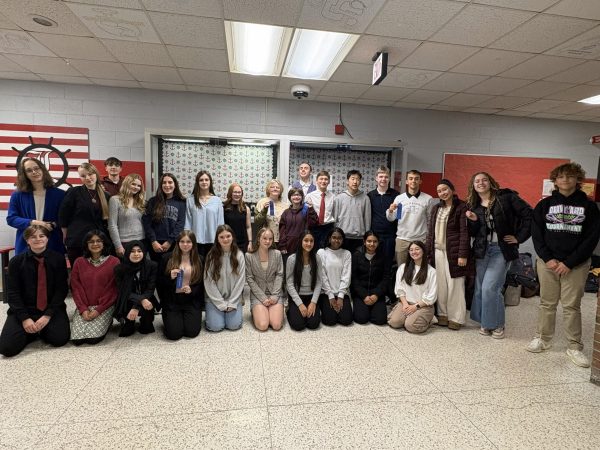
Not only has the club been “transformative in developing writing, analytical thinking and persuasive communication skills, all of which are essential for crafting strong college applications,” as Shankar has stated, but she also claimed that the skills she has gathered from her time there “are ones [she’ll] carry into every future endeavor.”
Wright also voiced that he plans on using the skills he has accumulated from Speech and Debate to harness them in a conference room as he pursues finance.
Students note the amount of effort and research required for a competitive round in Speech and Debate. “Our research process begins with scanning a wide range of reputable online sources and academic articles using targeted keywords,” Shankar explained. From there, it is up to the team on how to articulate logical responses for both sides of their argument as neither them nor their opponents are aware of the side they will defend until the round has commenced. This adds another layer of nerves for the students, as would any kind of competitive atmosphere.
“I think there are always some nerves going into a round because you don’t know the person you are competing against, nor do you know what arguments they may run,” Wright said.
However, despite the trials and hiccups the team may have on the road to any competition, they know that what they are doing will ultimately benefit them in both the near and far future.
“Every round feels exhilarating. The most fulfilling part of competition is debating issues that matter deeply to us—race, identity, feminism and social justice,” Shankar said.