
After years of hiatus, McDowell’s Sign Squad revived its interest in American Sign Language by focusing its meetings on exploring deaf lanugage and culture.
As the lead advisor for the club, Elysa Farrell said students showed interest about seven years ago, but that the pandemic stunted the club’s growth.
“There were probably 10 or 15 people that were in it at that time, and then COVID happened,” Farrell said. The Sign Squad seemed to dissolve until this year, when Farrell was approached “by other students who were interested in restarting it this year.”
Every other Tuesday, members of the Sign Squad come to room 4-103 to learn how to introduce themselves, ask important questions, share their interests and learn other ways to bond through sign language. The club environment is quiet and cozy, with the people split into small groups to help each other practice signs or sentences when they want a challenge.
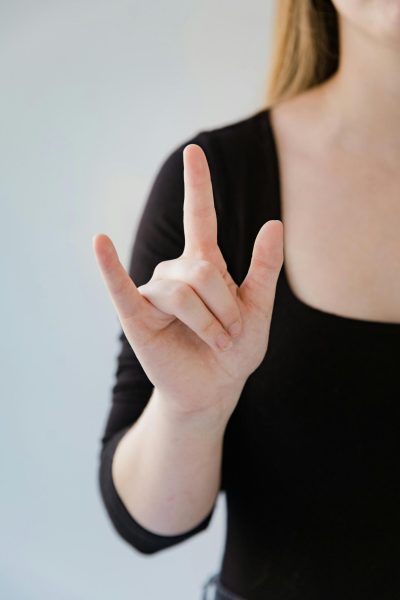
Farrell said the club usually focuses on words and phrases in American Sign Language that would be important in the members’ lives. One of the unique things about ASL that can be observed in the club is how, when introducing themselves, people spell out their name using the signs for each letter.
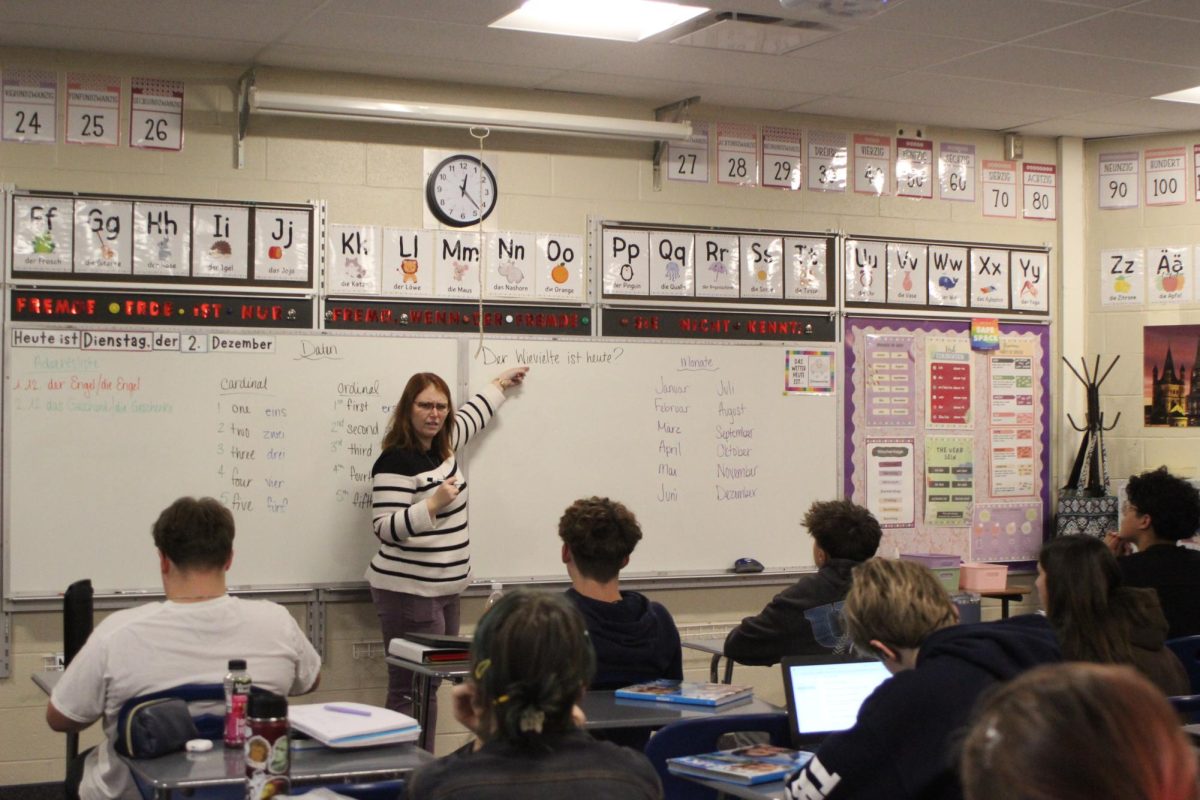
Another thing that might stand out as you visit a meeting of the Sign Squad is how similar the club is to a classroom environment. Farrell does her best to help guide the members through how to sign different words and phrases while the students eagerly watch as they have a genuine interest in learning this language that is far too often ignored.
“It’s a language that a lot of us don’t know, and I think it could be extremely useful,” Farrell said about the idea of turning this club into an official foreign language class at McDowell. “I think sign language would be a great thing to add to that department.”
Hearing people might not have thought about learning sign language, but many people, deaf or not, could find good use of this unique language. Being able to communicate easily with people who are part of the deaf community, or just people who are hard of hearing, could help with many opportunities in life.
Jaiden Hamilton, a 2025 McDowell graduate who is neither deaf nor hard of hearing, reflects on what initially led to his interest in sign language.
“I had a friend who really had nobody else to talk to, nobody was deaf, nobody was hard of hearing, nobody knew it, so I just took the initiative to learn it just to have a friend to connect with,” he said.
Hamilton, like many others, began learning sign language as a way to talk with someone he knew, but this was far from the end of Hamilton’s ASL journey. Learning sign language changed his life completely.
His initial interest in learning ASL led to an internship that has led to a possible career. His goals are to take the Educational Interpreter Performance Assessment (EIPA) and become an interpreter for an elementary school. By becoming integrated in the deaf community through courses, clubs and peers, his sign language skills growing exponentially: “It hasn’t even been two years yet, and I’m conversationally fluent and comfortable in the language at this point,” Hamilton said.
Students interested in joining the Sign Squad club at McDowell can go to room 4-103 every other Tuesday or see Farrell for more information.